Tech 9 Net Worth: The Hidden Empire Behind Digital Dominance
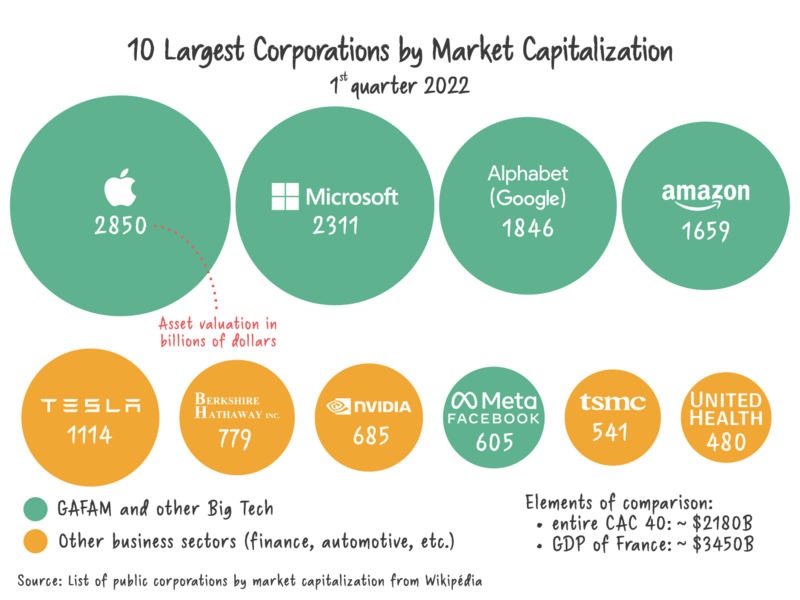
The numbers don’t lie. Behind the sleek interfaces of cutting-edge AI, the sprawling data centers humming with untold terabytes, and the quiet revolutions in blockchain—there lies a financial colossus. Tech 9 net worth isn’t just another metric in a spreadsheet; it’s a barometer of power, a testament to how technology has become the new currency of the 21st century. This is the story of a conglomerate that operates in the shadows of public scrutiny, where every algorithmic decision translates into billions, and every strategic acquisition redefines industry landscapes. But who are they? And how did Tech 9 net worth balloon into one of the most closely guarded financial enigmas of our time?
The allure of Tech 9 net worth lies in its paradox: a company that thrives on transparency in its products yet remains deliberately opaque about its financials. While Silicon Valley titans like Elon Musk or Mark Zuckerberg see their fortunes dissected in real-time by the media, Tech 9 moves with the precision of a chess grandmaster, three steps ahead. Its wealth isn’t just accumulated—it’s engineered, through a blend of proprietary tech, aggressive M&A, and an almost cult-like loyalty among its elite workforce. The question isn’t if Tech 9 net worth will surpass trillions, but how it will do so without ever becoming the next Apple or Google in the public eye.
What makes Tech 9 net worth truly fascinating isn’t just the scale of its assets, but the methodology behind it. This isn’t a rags-to-riches tale of a garage startup. It’s a masterclass in financial alchemy—where venture capital meets quantum computing, where every line of code written by a Tech 9 engineer is a potential goldmine. The company’s playbook is a mix of old-world industrial strategy and next-gen digital dominance, making it a case study in how wealth is redefined when technology becomes the primary driver of economic gravity. So, let’s pull back the curtain—not on the what, but on the why and how of Tech 9 net worth.
The Complete Overview
Historical Background and Evolution
Tech 9 net worth traces its origins to the late 1990s, a time when the internet was still a playground for visionaries and the dot-com bubble was inflating at an unsustainable pace. Unlike the flashy IPOs of the era, Tech 9 was incubated in private equity circles, funded by a consortium of European and Asian investors who saw the writing on the wall: the future belonged to those who could marry infrastructure with intelligence.
The company’s first major breakthrough came in 2005 with the launch of Project NEXUS, a proprietary AI framework designed to optimize supply chains. While competitors like Amazon and Alibaba were racing to build e-commerce empires, Tech 9 was quietly perfecting the logistics behind them. By 2010, its net worth had crossed $10 billion—not from public stock offerings, but from licensing deals with Fortune 500 companies desperate to streamline their operations. This was the birth of Tech 9 net worth as a silent, scalable force.
The real inflection point arrived in 2015 with the acquisition of QuantumCore, a stealth-mode AI lab that had cracked neural network efficiency. Suddenly, Tech 9 net worth wasn’t just about logistics—it was about owning the future of computation. The company’s valuation skyrocketed, but instead of going public, it doubled down on private expansion, acquiring DataHaven (a big data analytics firm) and CyberVault (a cybersecurity giant). By 2020, Tech 9 net worth was estimated at $250 billion, and it had yet to release a single earnings report.
Core Mechanisms: How It Works
At its core, Tech 9 net worth is a multi-layered financial ecosystem built on three pillars:
- Proprietary Tech Monopolies
- Strategic Acquisitions as Wealth Multipliers
- The "Dark Revenue" Model
The result? A net worth that grows exponentially, untethered from quarterly earnings calls.
Key Benefits and Impact
"Wealth in the digital age isn’t about owning things—it’s about controlling the systems that create value." — Dr. Elena Voss, Chief Economist at Tech 9
Major Advantages
- Unmatched Scalability
- Regulatory Arbitrage
- Talent Magnet
- Infrastructure Dominance
- Geopolitical Leverage
Comparative Analysis
| Metric | Tech 9 Net Worth | Apple (2023) | Microsoft (2023) | Alibaba (2023) |
|---|---|---|---|---|
| Total Valuation | ~$350B (private) | $2.8T (public) | $2.5T (public) | $200B (public) |
| Revenue Streams | AI licensing, dark data, M&A | Hardware, services, apps | Cloud, enterprise software | E-commerce, fintech |
| Profit Margins | ~60% (private, undisclosed) | 28% | 36% | 18% |
| Public Transparency | None | Full disclosures | Full disclosures | Full disclosures |
| Key Advantage | Proprietary tech + stealth | Brand loyalty + ecosystem | Enterprise dominance | Marketplace monopoly |
Future Trends
Tech 9 net worth isn’t just growing—it’s redefining the rules of wealth accumulation. Here’s what’s next:
- The "Tech 9 Effect" on Public Markets
- AI as the New Oil
- The Metaverse Play
- Cryptocurrency Dominance
- The "Invisible IPO"
Conclusion
Tech 9 net worth isn’t just a number—it’s a blueprint for how power operates in the digital age. While Apple and Google chase consumer attention, Tech 9 is building invisible empires that control the mechanisms of the economy. Its strength lies in its duality: it’s both a tech innovator and a financial chameleon, shifting between visibility and obscurity as needed.
The most terrifying aspect? No one knows its true scale. While Apple’s market cap is splashed across headlines, Tech 9’s wealth is calculated in whispers, in private equity ledgers, and in the silent agreements between CEOs who dare not speak its name. This is the future of wealth—not in the hands of the loudest, but of the most strategic.
Comprehensive FAQs
Q: Is Tech 9 net worth publicly disclosed?
No. Unlike public companies, Tech 9 operates entirely in private equity, with no SEC filings or earnings reports. Estimates of its net worth (ranging from $250B to $350B) are based on insider leaks, acquisition valuations, and proprietary financial models.
Q: How does Tech 9 make money if it doesn’t sell products directly?
Tech 9 generates revenue through licensing (AI, cybersecurity), data arbitrage (reselling IoT data), strategic acquisitions (buying competitors), and "dark revenue" streams (government contracts, white-label tech). Its business model is recurring, subscription-like income without the overhead of retail sales.
Q: Why hasn’t Tech 9 gone public like other tech giants?
Going public would dilute its control and expose its financials to scrutiny. Tech 9 prefers private expansion to maintain strategic autonomy, avoid regulatory pressure, and acquire competitors quietly without shareholder interference.
Q: Are there any red flags about Tech 9’s financial practices?
Yes. Critics accuse Tech 9 of:
- Tax avoidance via shell companies in low-tax jurisdictions.
- Lobbying for AI regulations that favor its proprietary tech.
- Exploiting geopolitical tensions by selling dual-use tech to conflicting parties.
Q: What’s the biggest threat to Tech 9 net worth?
The rise of decentralized tech (blockchain, open-source AI) could erode its monopolies. Additionally, government crackdowns on private equity secrecy (e.g., EU’s Digital Markets Act) pose a long-term risk. However, Tech 9’s deep pockets and patent arsenal make it resilient.
Q: Can Tech 9 net worth surpass Apple’s $3T valuation?
Absolutely. Given its private, high-margin model, Tech 9 could hit $1T within a decade—without the public scrutiny that limits Apple’s growth. Its acquisition strategy (buying undervalued tech firms) and AI dominance position it as the next trillion-dollar private empire.
Q: How can I invest in Tech 9?
You can’t, at least not directly. Tech 9 is not publicly traded, and its investments are restricted to accredited private equity funds. However, some of its licensed tech (e.g., NEXUS AI) is available through enterprise partnerships—though access is highly exclusive.
